We value your privacy
We use cookies to enhance your browsing experience, serve personalised ads or content, and analyse our traffic. By clicking "Accept All", you consent to our use of cookies.

Since ancient times, people all over the world have built wooden houses from spruce and pine, considering them the best building materials, rather than cedar, larch or other species, as many mistakenly believe. Houses made of spruce and pine are of higher quality than houses made from other types of wood, mainly for 3 main reasons:
1. High thermal insulation properties. Houses made of pine and spruce are the warmest because they have a naturally low wood density. For example, larch and other hardwood species have such low thermal insulation properties that their walls must be at least twice as thick as walls made of spruce and pine.
2. Natural ventilation system. Houses made of pine and spruce do not heat up in hot weather. Due to the structure of their wood, continuous air exchange takes place inside it, allowing wooden houses to “breathe”, i.e. to let air pass through the structure of the wood fibers in both directions.
This process prevents the interior spaces from overheating, which is why wooden houses made of spruce and pine generally do not require air-conditioning systems. The exception is hot southern countries.
3. More beautiful wood grain. For example, larch houses are often clad with spruce over time because their walls acquire an unattractive dark-gray color, whereas spruce has the advantage of being beautiful and light in color.

We manufacture wooden houses from both spruce and pine. To help you make your choice, we would like to explain the technical and aesthetic characteristics of spruce houses compared with pine houses.


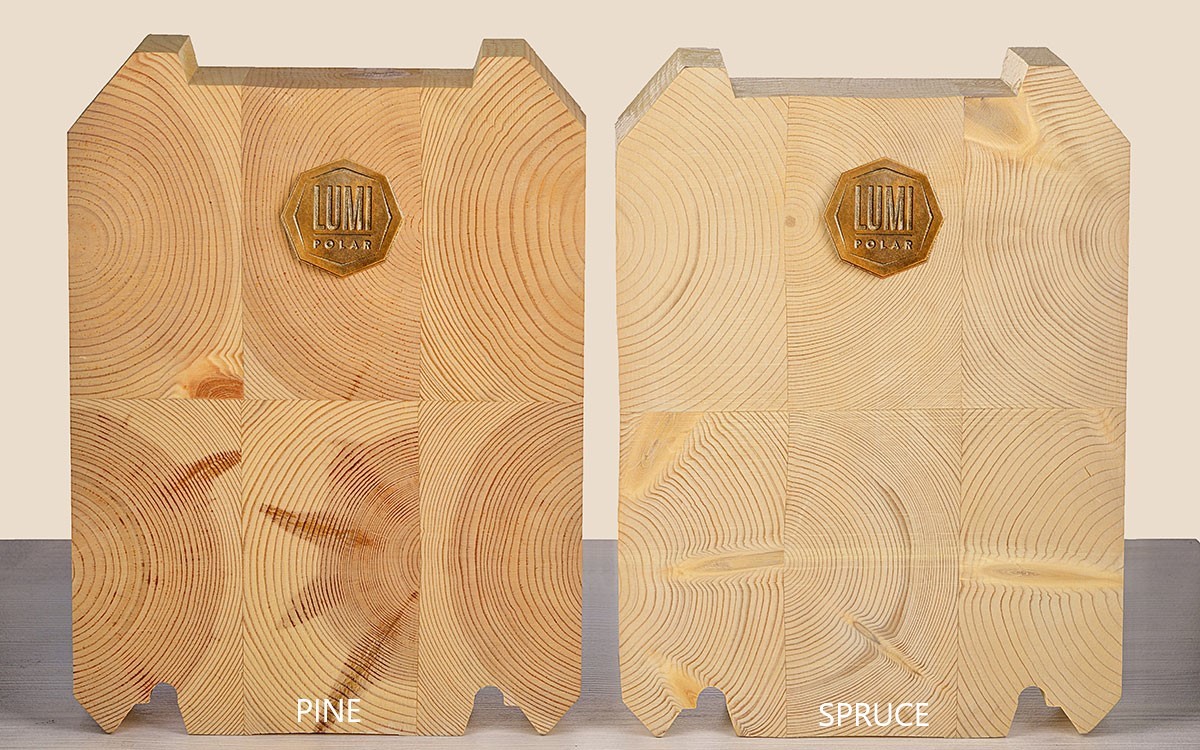
Spruce has a uniform white color throughout the entire trunk because its heartwood (the center of the tree) and sapwood (the wood located beneath the bark) are both the same light color.
Pine has a variegated yellow-white color because it has a large resin-rich heartwood (pine contains a lot of resin) and a narrow light-colored strip along the bark.
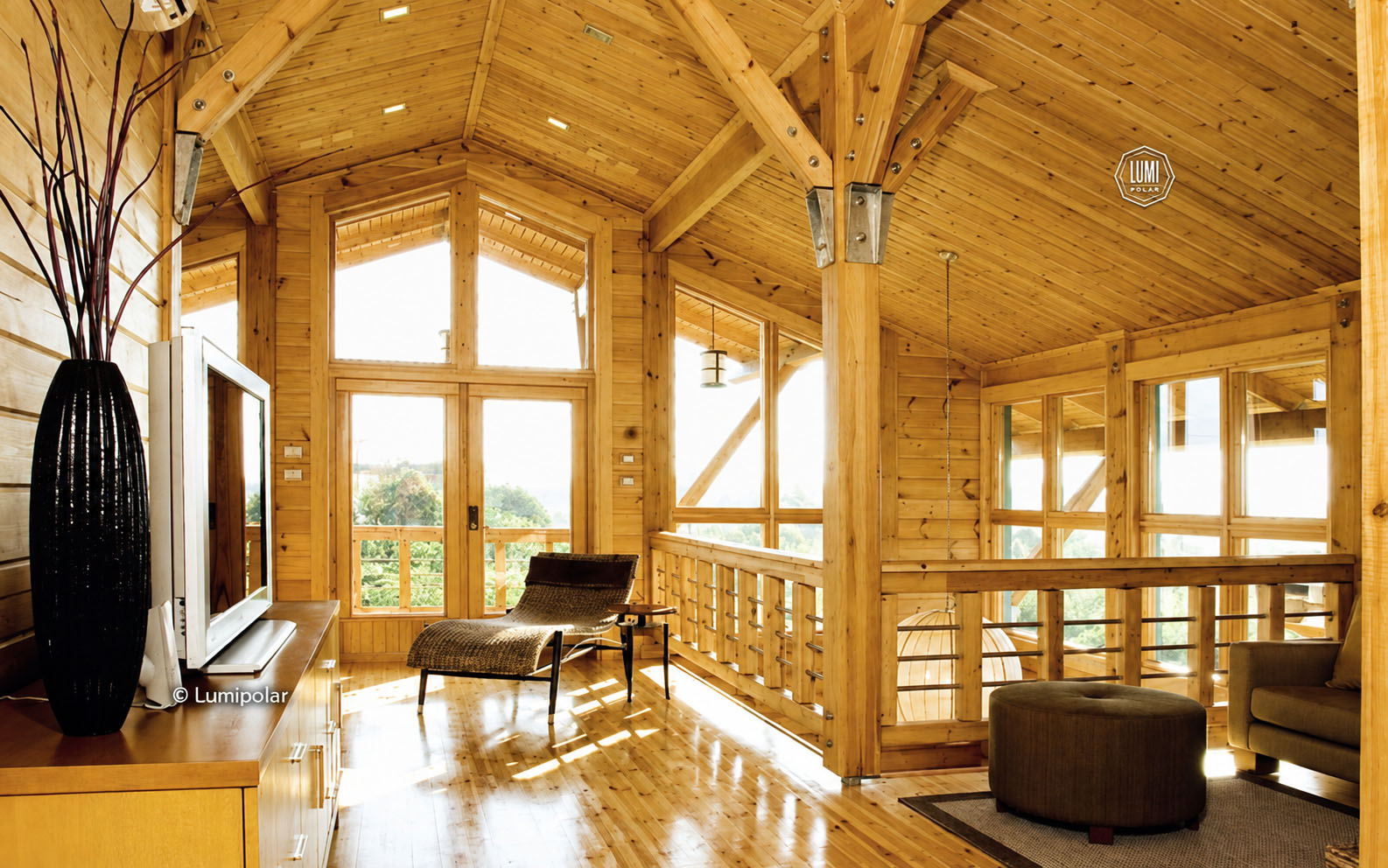
Variegated pine creates a more traditional atmosphere for a wooden house. Pine has a resinous aroma.
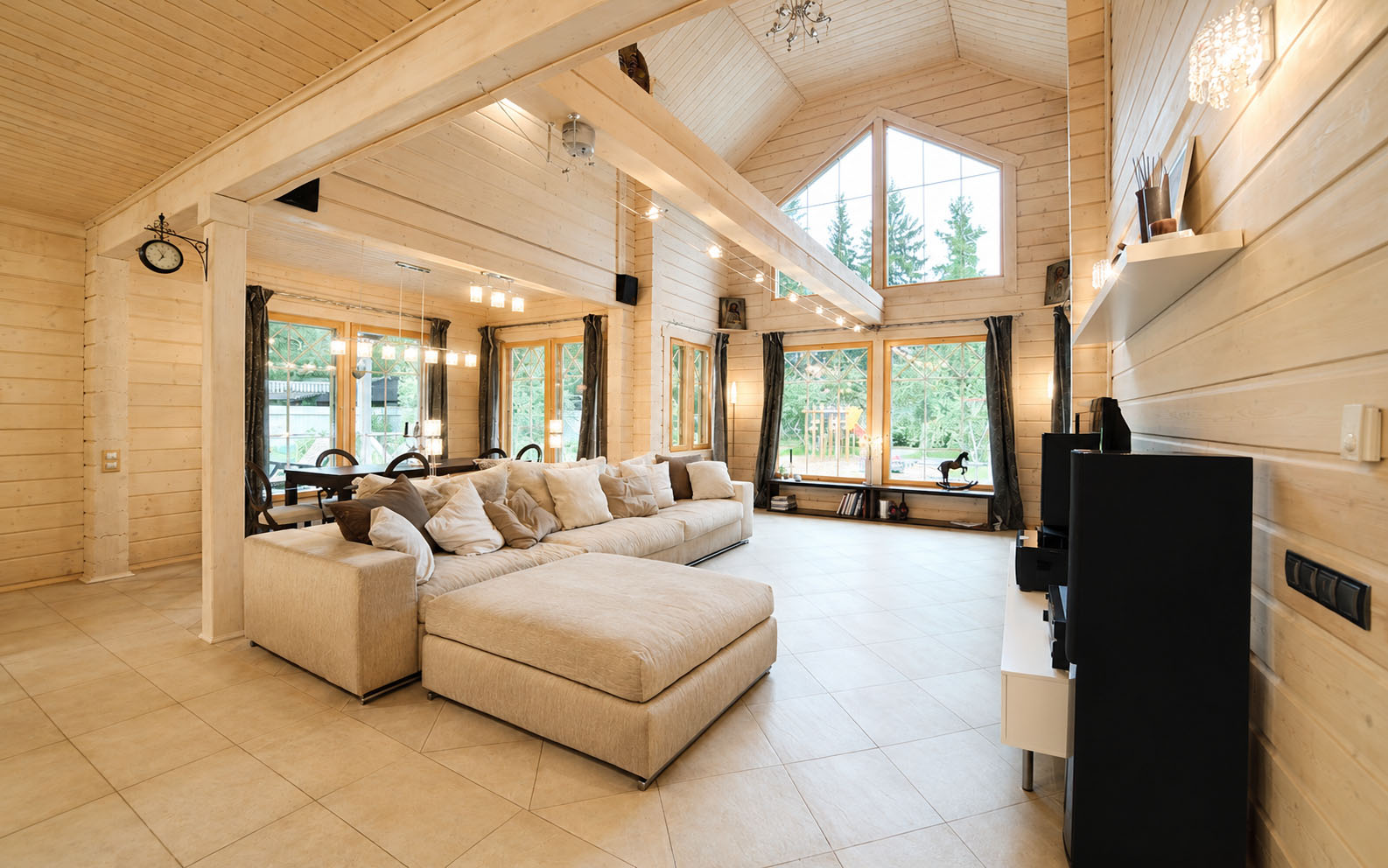
Light-colored spruce is more suitable for modern-style houses and gives them a sophisticated, premium appearance. Spruce has a fresh coniferous aroma.


Since glued laminated timber is preferred in the construction of premium wooden houses, uniformly colored glued spruce has a greater aesthetic advantage because its glue joints are not visible, unlike those in variegated pine.
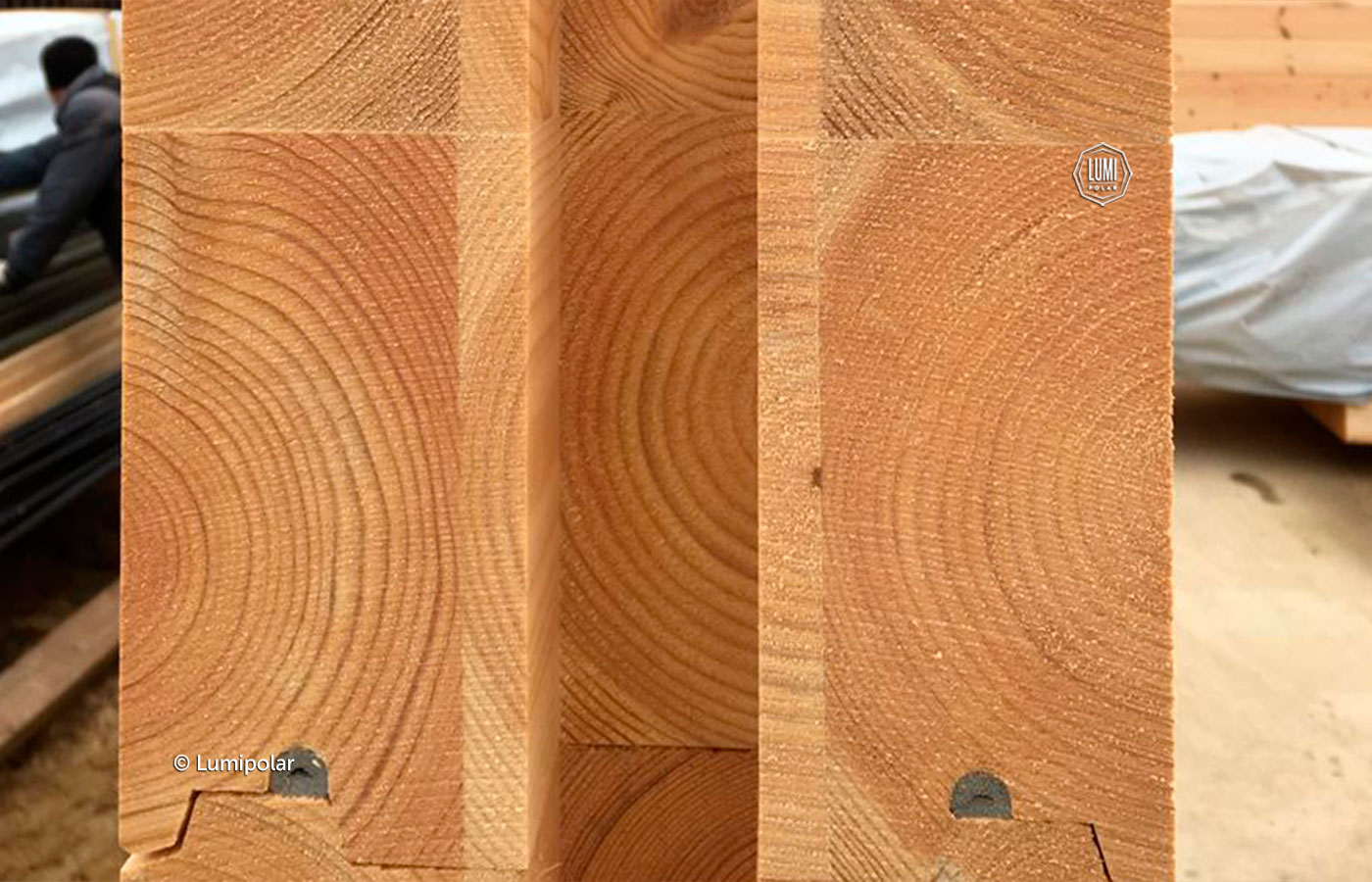
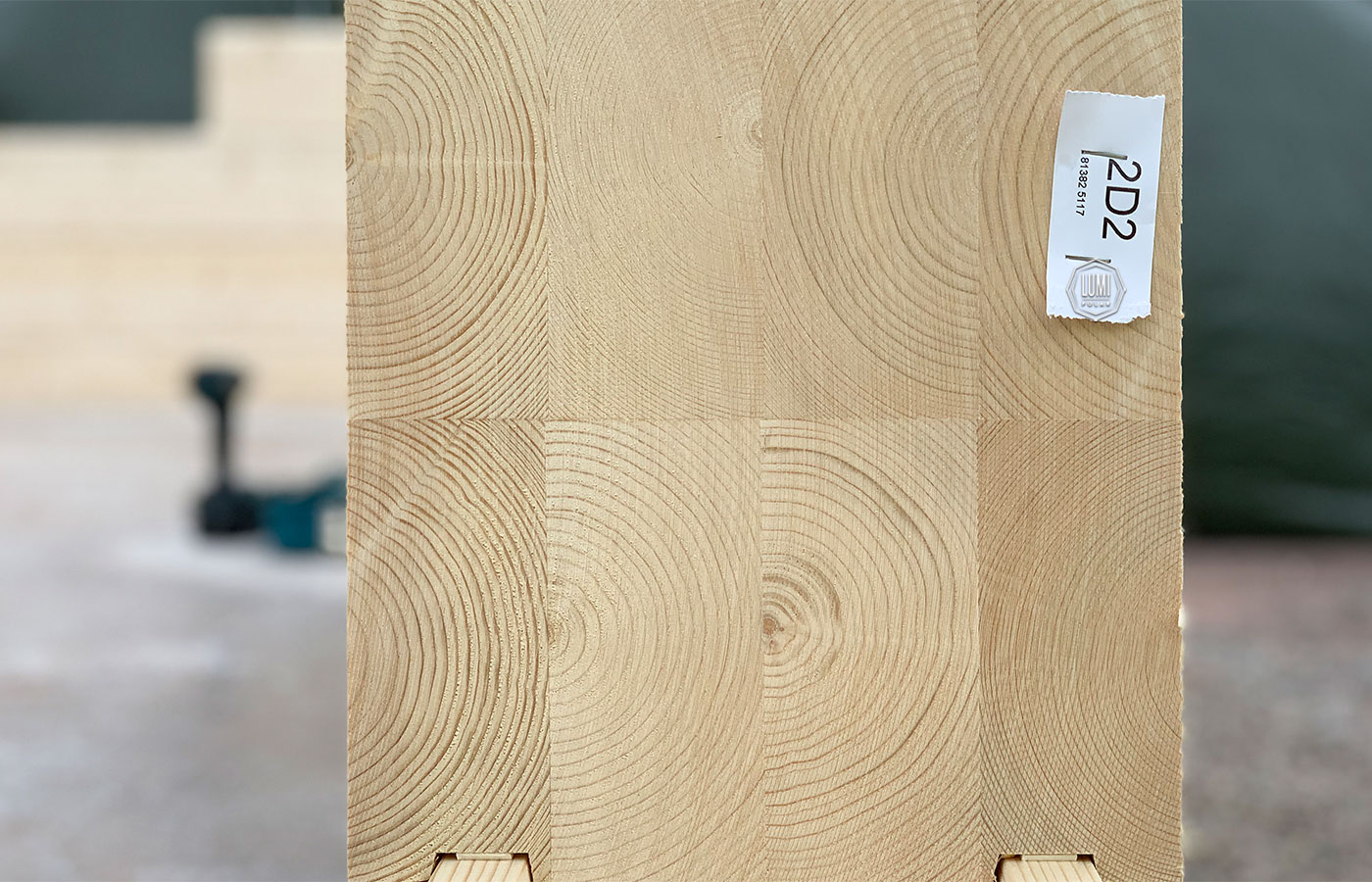
Spruce has light-colored knots that do not change over time. Pine has large yellow-brown knots that become darker over time. In pine houses made from low-quality timber, knots can dry out and separate from the wood, which looks rather unattractive, especially in the interiors of wooden houses.
In our wooden houses, however, we use only the highest grades of pine timber, so our houses look neat, elegant and have a beautiful amber color.
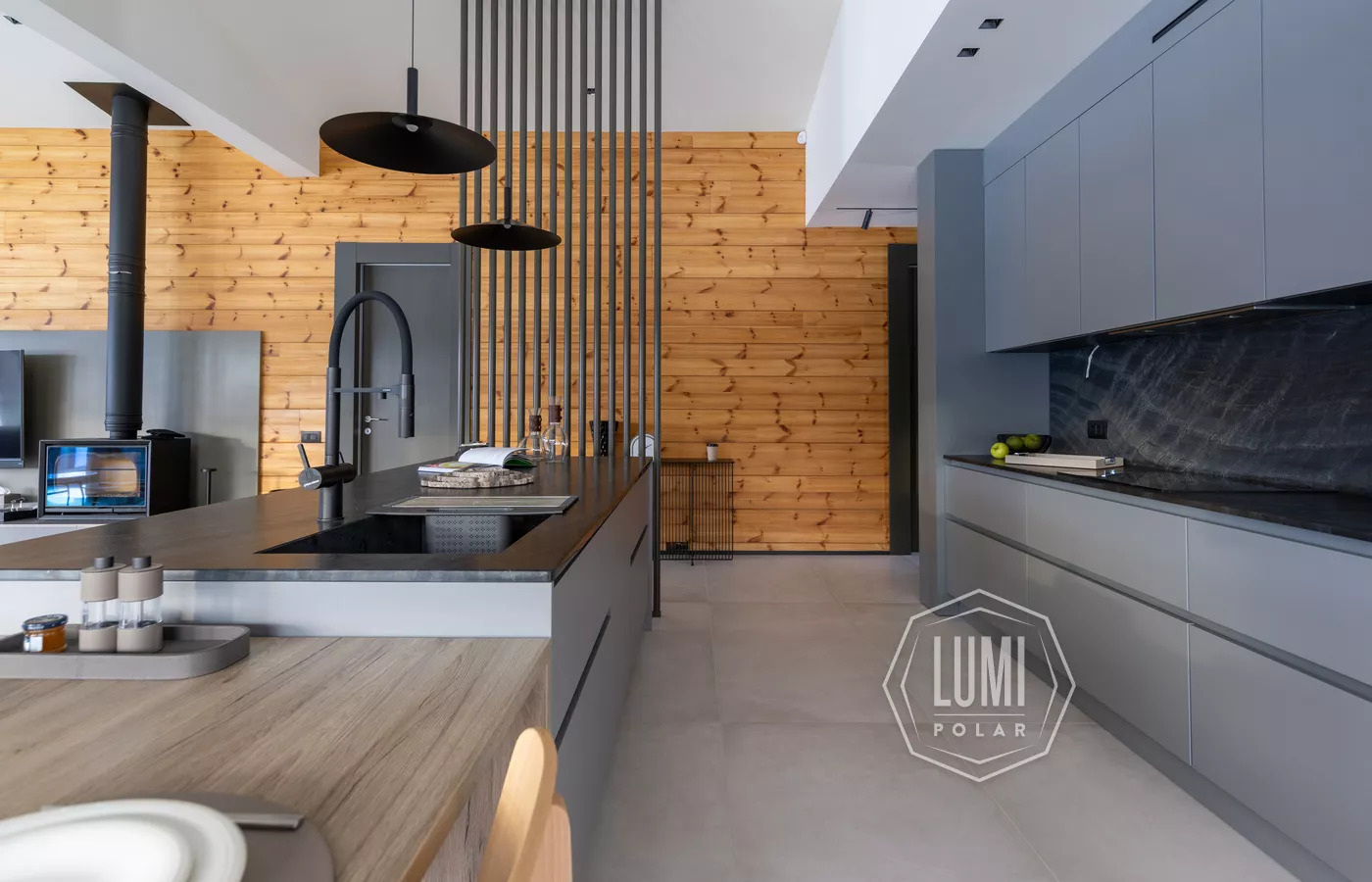
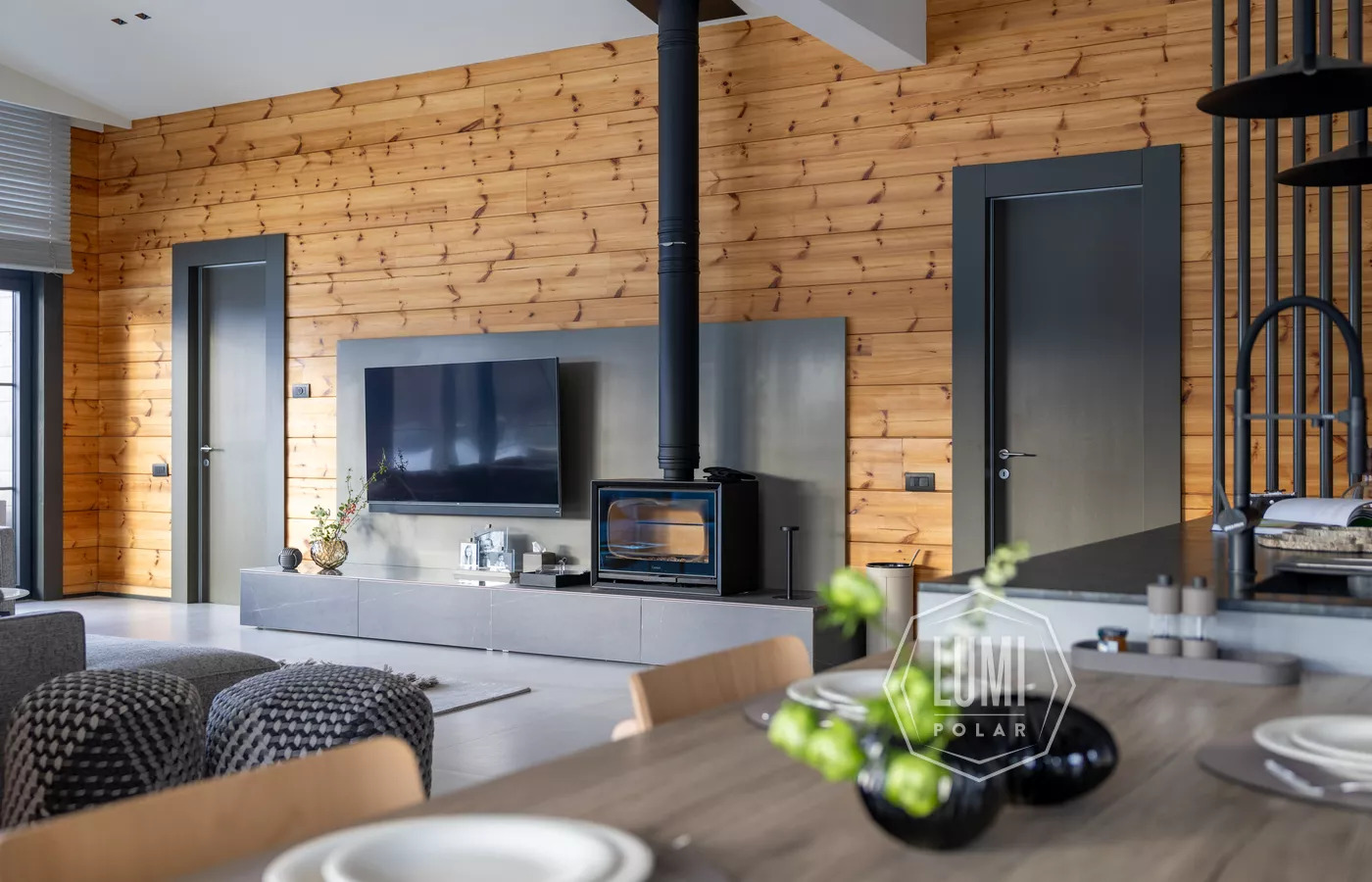
Pine wood and its large knots contain a lot of resin, which can sometimes appear on the walls in the form of drops and can flow heavily when heated. For this reason, pine should not be used in saunas. Spruce also contains resin, but much less of it, mainly concentrated in its small knots and contained in tiny resin pockets. Therefore, spruce does not leak resin and is used for sauna construction.
Both spruce and pine can release resin on the southern side of a house, especially when the house is painted a dark color, as dark colors absorb more solar heat. In any case, this does not affect the quality of our houses, as we manufacture them from the highest grades of timber. Many people even like the amber-colored resin drops.


Due to the specific structure of its cells, spruce absorbs less moisture than pine.
When it rains, spruce becomes wet mainly on the surface, which allows it to dry quickly and easily.
Pine, by its nature, absorbs moisture more deeply. Repeated cycles of getting wet and drying out can eventually lead to cracks in walls made of pine. However, since we use only the highest grades of timber, even if cracks appear in our houses, they will be very minor and will not affect the quality of the house in any way.


Because spruce is more moisture-resistant, it is less prone to warping, bonds better, and has stronger glue joints. Stronger glue joints mean stronger laminated timber.


Due to its structure, spruce is less dense because it is more porous, with a greater number of cells, and therefore weighs less than pine. 1 m³ of spruce weighs approximately 100 kg less than 1 m³ of pine. The greater the number of cells, the stronger and more flexible the wood is.
For example, under the same load, pine may break, whereas spruce will flex skillfully instead. In Finland, this is why industrial structural beams are manufactured exclusively from spruce.
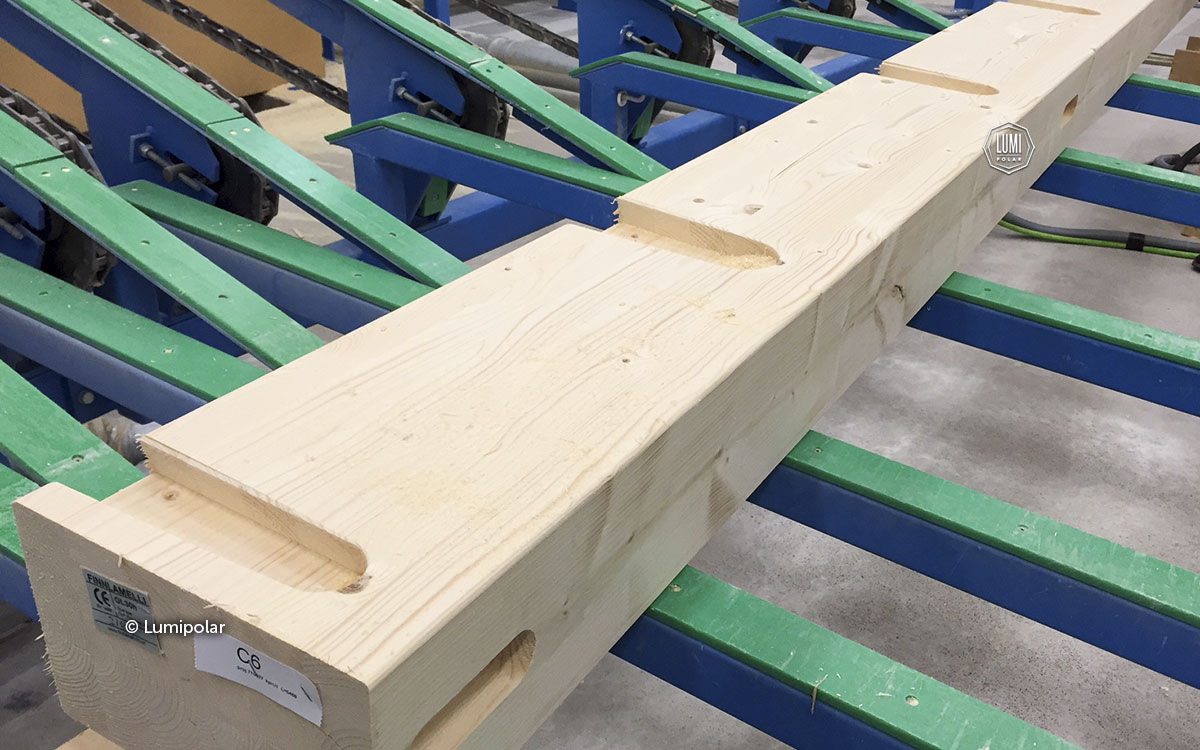
Because spruce is more flexible and stronger in bending, it is less prone to cracking. A crack can still appear in a spruce house, but this happens rarely because wood is a “living” material and can sometimes behave unpredictably. Pine houses may develop more cracks.
As for our wooden houses made from high-grade Finnish timber, if a small crack does appear somewhere, it will not affect the quality in any way. This is different from cracks in timber made from low-quality raw material, which can gradually become deeper and affect the structural integrity of the walls, resulting in drafts, leaks, freezing and other problems.


Because spruce contains less resin and is more porous, it is warmer in winter, as its pores help retain heat, and cooler in summer, as its porous structure allows better air exchange. It is worth noting that both spruce and pine, due to their porous structure, are considered among the warmest types of wood in winter and the coolest in summer.
In winter, the cells of their wood have a natural ability to retain heat, while in summer they allow air to pass in both directions. Therefore, houses do not overheat in hot weather and air conditioning is generally not required. The only exception is extremely hot climates.
The cells of spruce and pine wood also absorb sound effectively, so the more porous the wood, the better its sound insulation properties. Accordingly, spruce, being more porous, is warmer in winter, cooler in summer and better at absorbing sound.
Recent scientific research conducted in Finland on wooden houses made of spruce and pine that were built more than 100 years ago has shown that spruce houses have been better preserved than pine houses.